
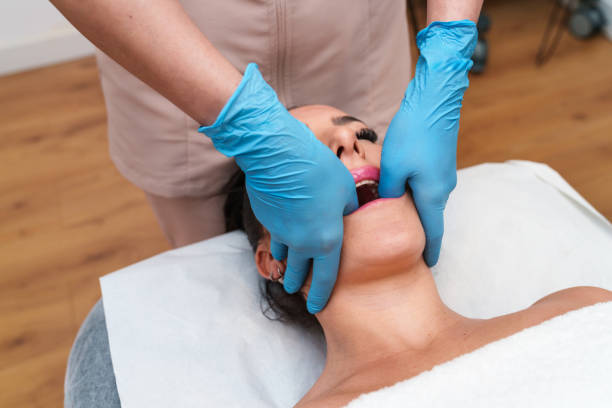
What’s actually going on in your jaw
The temporomandibular joints sit just in front of each ear canal and move thousands of times a day — every word, bite, and yawn. Each joint is a precise system of muscles, ligaments, cartilage, a gliding disc, and the elastic tissue that keeps that disc in place. When any part of that system is inflamed, displaced, or overworked, you get TMD: temporomandibular disorder.
Why physical therapists are the right first call
TMD is a movement problem, and movement problems are what physical therapists treat. Our approach is conservative, cost-effective, and reversible — no irreversible bite changes, no surgery — with honest, realistic goals set at your first evaluation.
Your therapist will classify what type of TMD you have — inflammation, limited or excessive range of motion, disc displacement, muscle pain, or neck-driven symptoms — because each is treated differently. Treatment typically combines gentle hands-on joint and soft-tissue techniques (inside and outside the mouth), targeted exercises, and education on habits that load the jaw.
The neck connection
Most TMD patients also have neck pain, and the two feed each other: upper-neck joint dysfunction commonly refers pain to the jaw and head. We treat both together — one of the reasons our TMJ outcomes have made this a signature program, with patients referred to us by dentists and physicians across Greater Lansing.
Ready to start? Download the TMJ patient packet before your first visit.