
Swimming Injury Physical Therapy & Recovery
A competitive swimmer takes more shoulder strokes in a week than a pitcher throws in a year. When something's off — mobility, technique, training load — the shoulder announces it first.
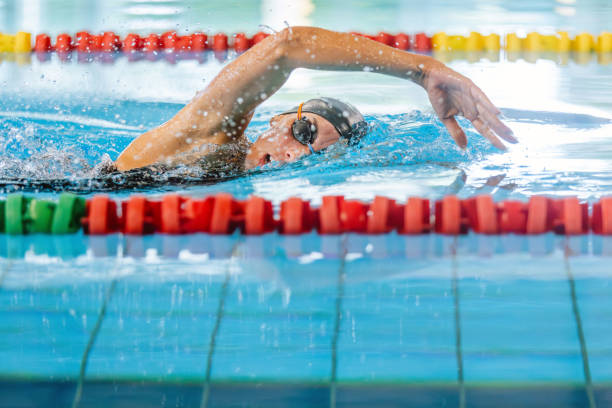
Common swimming injuries we treat
Swimming injuries are volume injuries in the purest sense — thousands of repetitions of the same stroke, every practice.
Swimmer's shoulder
The sport's defining injury: rotator cuff and impingement pain from stroke volume. Early signs — ache after practice, pain at the catch — respond fast; ignored, it steals whole seasons.
Shoulder instability
Swimmers are selected for mobility, and some shoulders are looser than their strength can control. Building cuff and scapular strength restores the control the range demands.
Neck pain
Breathing mechanics and head position drive most swimmer neck pain — hundreds of rotations per practice through a stiff neck adds up. Treatment pairs hands-on care with stroke-level adjustments.
Low back pain
Butterfly and breaststroke load the spine in extension; flip turns add compression. Persistent back pain in a teen swimmer warrants evaluation, not just more core work.
Breaststroker's knee
The whip kick stresses the inside of the knee in a way no other sport does. Load management plus hip strength usually settles it without giving up the stroke.
Posture & mobility problems
The forward-rounded 'swimmer's posture' limits the overhead mobility swimming itself requires — a loop we break with targeted thoracic and shoulder mobility work.
How we get you back in the pool
Assessment, recovery, and strength plans from doctors of physical therapy — we work with you until the problem is resolved and you're back at peak performance.
Assess
A full evaluation of your injury and your sport-specific movement — we find the cause, not just the sore spot.
First visitRecover
Hands-on treatment and a plan to calm pain and restore motion. Injury care is typically covered by insurance with a referral.
Insurance-basedRebuild
Progressive strength and mobility work targeted at what your sport demands — so the problem doesn't come back.
Either trackReturn
A graded return to play, with optional performance training to come back better than before the injury.
Direct, cash-basedWhy swimmers come to us
Swim injuries hide inside training logs — the yardage jump three weeks ago, the new paddle set, the taper that never came. Our evaluations read the log as carefully as the shoulder, and our plans keep athletes in the water while the problem resolves. Club and school swimmers come to Haslett from across East Lansing, Okemos, and Greater Lansing.